Rethinking Transitional Style for Everyday Living
Have you ever felt torn between the warmth of traditional design and the clean simplicity of modern interiors?
You’re not alone.
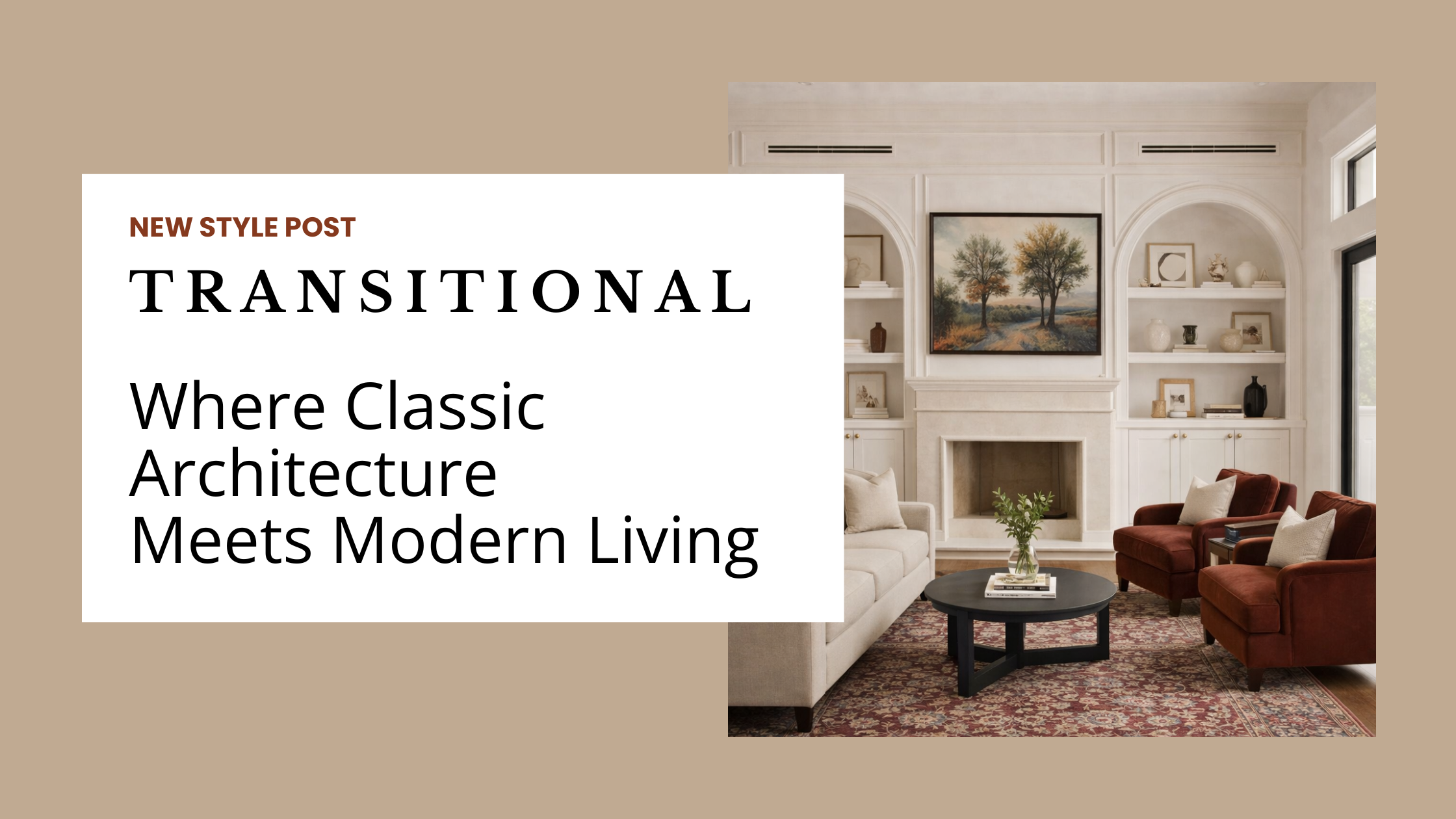
Transitional Style lives in that in-between space. It blends classic architectural details—like crown molding, wall paneling, and timeless rugs—with modern furniture, lighting, and art. The result is a look that honors the past while feeling current and livable.
This post is grounded in the Harmony by Design™ method for styling, where structure, proportion, and thoughtful layering guide each decision. Transitional interiors are not about compromise—they are about balance.
The Foundation & Purpose of Transitional Style
At its core, Transitional interior design exists to create continuity. It softens the contrast between eras and allows traditional architecture and modern furnishings to coexist without tension.
Foundation Purpose:
- Preserve architectural character
- Introduce modern clarity
- Reduce visual heaviness
- Create long-term livability
- Bridge generations within a home
This style works particularly well in homes with existing traditional features that homeowners do not want to remove—but also do not want to feel dated.
What Transitional Style Is (And What It Is Not)
What This Style Is
Transitional Style is the meeting point between traditional and modern.
You will often see:
- Crown molding, millwork, or classic paneling
- Traditional silhouettes reinterpreted in simplified forms
- Neutral color palettes with subtle contrast
- Upholstered furniture with clean lines
- Statement lighting that leans modern
- Layered rugs, textured fabrics, and refined finishes
Transitional interiors feel composed and balanced. Nothing competes. Nothing overwhelms.
Color Palette + Textures
Transitional color schemes typically include:
- Warm whites and soft grays
- Greige, taupe, and muted earth tones
- Black accents for definition
- Occasional navy or deep charcoal for depth
Textures play an important role:
- Linen, velvet, and woven fabrics
- Subtle wood grains
- Matte metals
- Classic wool or Persian-style rugs
The palette remains restrained, but not stark.
What This Style Is Not
Transitional design is often misunderstood.
It is not:
- A safe or boring middle ground
- A diluted version of traditional
- A modern space with random classic pieces
- A trend-driven aesthetic
When done poorly, it can look undecided. When done well, it feels intentional and cohesive.
Common Myths About Transitional Interiors
Myth 1: Transitional Is Just “Neutral Everything”
While neutrals are common, the strength of this style lies in proportion and layering—not color avoidance.
Myth 2: It’s the Same as Contemporary
Contemporary interiors reflect what is current and evolving. Transitional is anchored in traditional architecture and softened by modern influence.
Myth 3: It Lacks Personality
Personality in Transitional homes comes through scale, art, textiles, and curated details—not dramatic statements.
Similar Styles vs Key Differences
Transitional vs Traditional
- Traditional: Ornate, formal, detailed
- Transitional: Simplified detailing, lighter palette, modern accents
Transitional vs Modern
- Modern: Clean-lined, minimal ornament
- Transitional: Keeps architectural detail, adds softness
Transitional vs Contemporary
- Contemporary: Trend-responsive
- Transitional: Rooted in classic structure
If You Like This, Transitional May Be a Natural Fit
Industrial Style often resonates with those who appreciate design that feels intentional rather than ornamental. You may find yourself drawn tYou may gravitate toward Transitional Style if you appreciate:
- Homes that feel updated without feeling new
- Architectural detail but want a lighter feel
- Classic furniture without heaviness
- Balance over bold contrast
Mini Style Quiz
Consider the qConsider the questions below as you read—your answers may clarify whether this style feels like a natural fit.
- Do you appreciate crown molding and millwork but prefer modern lighting and art?
- Do you want your home to feel timeless rather than trend-driven?
- Are you drawn to neutral palettes that still feel layered and warm?
- Do you prefer balance over bold stylistic statements?
- Would you rather update a home thoughtfully than redesign it entirely?
If you answered yes to three or more, Transitional Style may align naturally with your preferences.
(Visit our Transitional Style board for real-life interiors, material pairings, and lived-in design inspiration.)
How Transitional Style Aligns with Harmony by Design™
Within the Harmony by Design™ approach, Transitional interiors benefit from a structured styling process
HARMONY BY DESIGN™ — STYLING PROCESS:
- Discover & Define: Identify which traditional elements should remain and which need refinement.
- Simplify with Purpose: Remove visual weight that competes with architectural detail.
- Design the Flow: Balance scale, texture, and proportion across old and new elements.
- Elevate & Sustain: Styling decisions are refined to balance durability, scale, and visual consistency as the space evolves.
Transitional Style aligns naturally with Harmony by Design™ because both prioritize thoughtful decisions that age well and feel appropriate to how a space is actually used.
Transitional Style in Fort Worth Homes
Transitional interiors are especially relevant in Fort Worth homes, where traditional architecture is common but homeowners desire a more current aesthetic.
At Declutter + Design Co., we bring a refined and thoughtful touch to Fort Worth interiors and Fort Worth home design—bridging traditional foundations with modern clarity. Our work reflects how people truly live, creating homes that feel balanced, updated, and enduring.
Spaces designed with harmony, clarity, and care.
If you’re exploring Transitional Style for your Fort Worth home:
- Learn more about our approach on our Services page
- Explore curated inspiration and Shop the Look resources: Resources
When you’re ready for guidance tailored to your space and lifestyle, you can book a consultation with us. We’d be glad to help you think it through.
Leave a Reply